
ETICS systems
ETICS (External Thermal Insulation Composite Systems) are one of the most innovative and effective solutions used in modern construction to improve the energy efficiency of buildings. These systems consist of a layer of thermal insulation applied to the exterior of facades, combined with a protective coating that guarantees the durability and functionality of the construction. Throughout this article, we will discuss the characteristics of ETICS systems, how the different layers that comprise them work, their advantages, their origin, and their evolution.
Origin and emergence of ETICS systems
ETICS systems were created in response to the growing demand for energy efficiency in buildings. The need to reduce energy consumption, particularly in existing buildings, led to the creation of solutions that could improve thermal insulation without requiring a complete overhaul of the building's structure.
These types of systems emerged in Europe in the 1970s and 1980s, coinciding with the first large-scale efforts to reduce greenhouse gas emissions and improve energy efficiency. Their popularity is due to the search for solutions that would enable compliance with increasingly strict energy regulations while improving the sustainability of buildings.
Components and layers of ETICS systems
An ETICS system consists of several layers that work together to provide thermal and acoustic insulation and long-lasting protection for the building structure. Below, we detail the main layers that make up these systems:
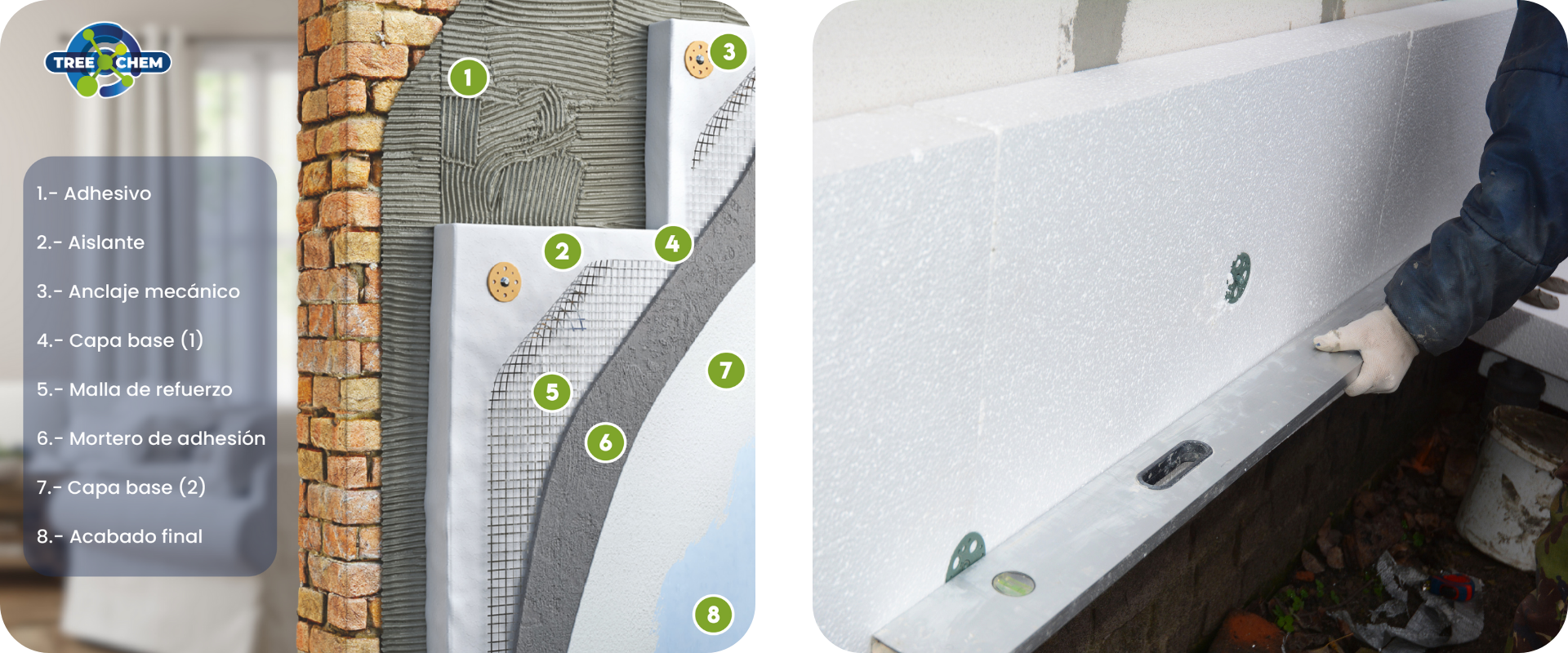
Functionality and advantages of ETICS systems
ETICS systems are widely known for their ability to improve the energy efficiency of buildings, but their functionality goes beyond simple thermal improvement. Some of the main features and advantages of these systems are as follows:
1. Thermal insulation: The main objective of ETICS systems is to improve the energy efficiency of buildings by providing a continuous layer of thermal insulation. This reduces heat loss during the winter and maintains a more comfortable indoor temperature in the summer.
2. Protection against moisture and the elements: The exterior insulation system protects walls from moisture and damage caused by adverse weather conditions. It also helps prevent condensation and mold growth inside the home.
3. Reduced noise impact: ETICS systems also help reduce external noise, providing additional sound insulation that improves occupants' quality of life.
4. Customized aesthetics: By incorporating a finishing layer that can vary in texture and color, ETICS systems offer great aesthetic flexibility, allowing architects and designers to customize the appearance of buildings according to their needs.
5. Durability and low maintenance: ETICS systems are highly durable, as the protective layers and insulation are designed to withstand inclement weather. In addition, they require minimal maintenance, making them a cost-effective option in the long term.
6. Increased property value: Since ETICS systems improve the energy efficiency and aesthetics of buildings, they increase their value on the real estate market, making them a profitable investment for both owners and investors.
These systems also play a crucial role in the renovation of old buildings. In many cases, improving thermal insulation in existing buildings is essential to reducing energy consumption, and ETICS systems allow these improvements to be made without the need for a complete renovation of the building structure. This versatility has made them an essential tool in both new construction and restoration projects.
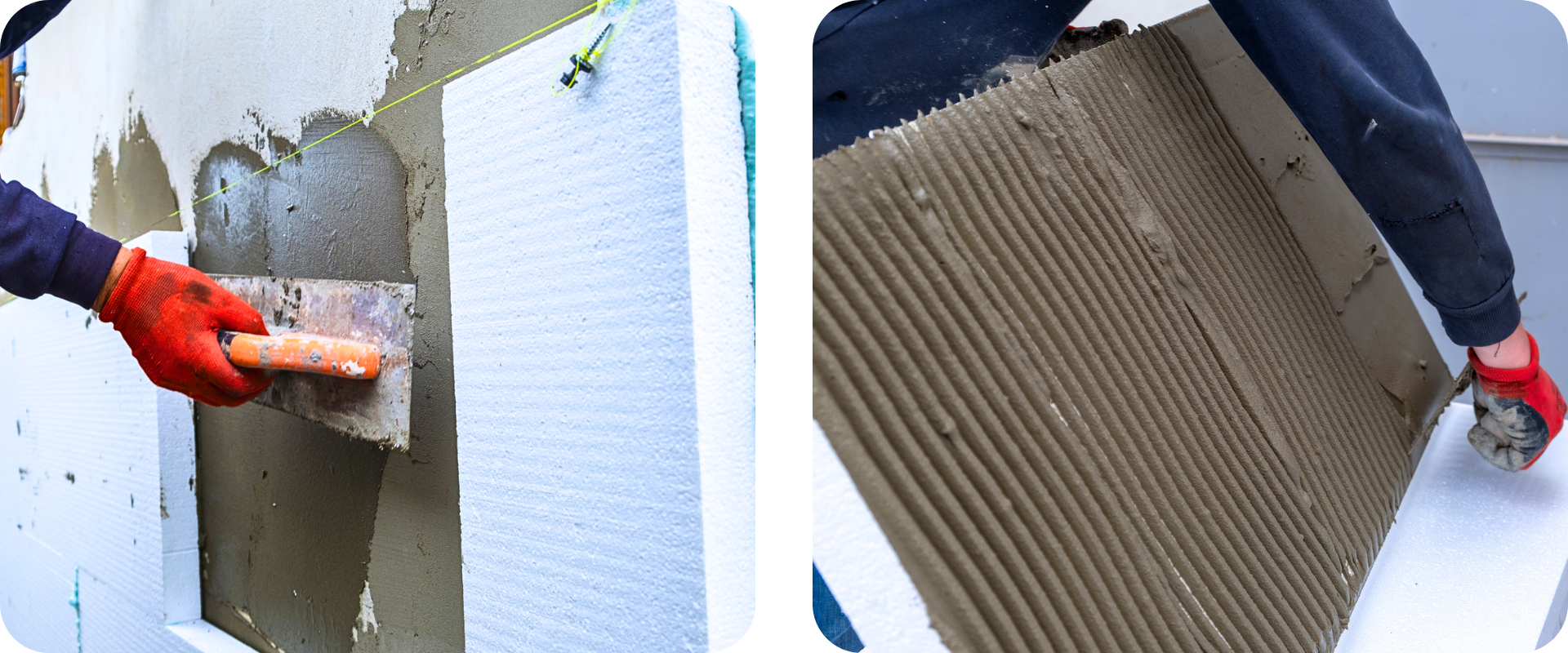
At Treechem, we offer a wide range of specialized additives for your ETICS system, formulated to optimize the adhesion and cohesion of the layers. Our products increase flexibility and impact resistance, improve durability against surface abrasion, and prevent cracking and caking, thus ensuring greater efficiency and longevity of the system.
Their impact on modern construction is undeniable, and they are expected to remain a key component in sustainable building in the future.
Learn the key factors behind high-quality stucco: substrate, rheology, adhesion, cracking, and technologies to optimize its application.
Learn the key formulation principles for developing grouts with superior performance, consistency, and durability for various construction applications.
The open time of ceramic adhesives refers to the period during which the material retains its ability to wet the substrate and develop effective adhesion.
.png)
Did you know that 65% of structural concrete deterioration is directly related to corrosion caused by moisture?

Celluloses are high molecular weight polysaccharides. They are transformed through chemical reactions into cellulose ethers, key additives used in multiple industries.
Polyamine compounds are key cationic organic coagulants in the treatment of industrial and municipal wastewater.
.png)