
Joint Compound: more than just a filler, a formula that builds confidence
Since its introduction to the North American market in the 1950s, joint compound has evolved from a basic product to a complex, technical formulation that is key to the dry construction system. Its quality no longer depends solely on gypsum: today, the right additives are crucial to its performance, efficiency, and final finish.
What is Joint Compound?
It is a mixture designed to seal joints between drywall panels, cover screws, and repair imperfections in surfaces before the final finish. Its versatility and ease of use have made it a standard material in residential, commercial, and industrial projects. The use of joint compound became popular with the expansion of drywall in the U.S. in the mid-20th century. In the beginning, it was a simple mixture of plaster and water applied on site. Over time, technical requirements led to the inclusion of polymers, mineral fillers, and additives that improved workability, adhesion, setting, and strength.
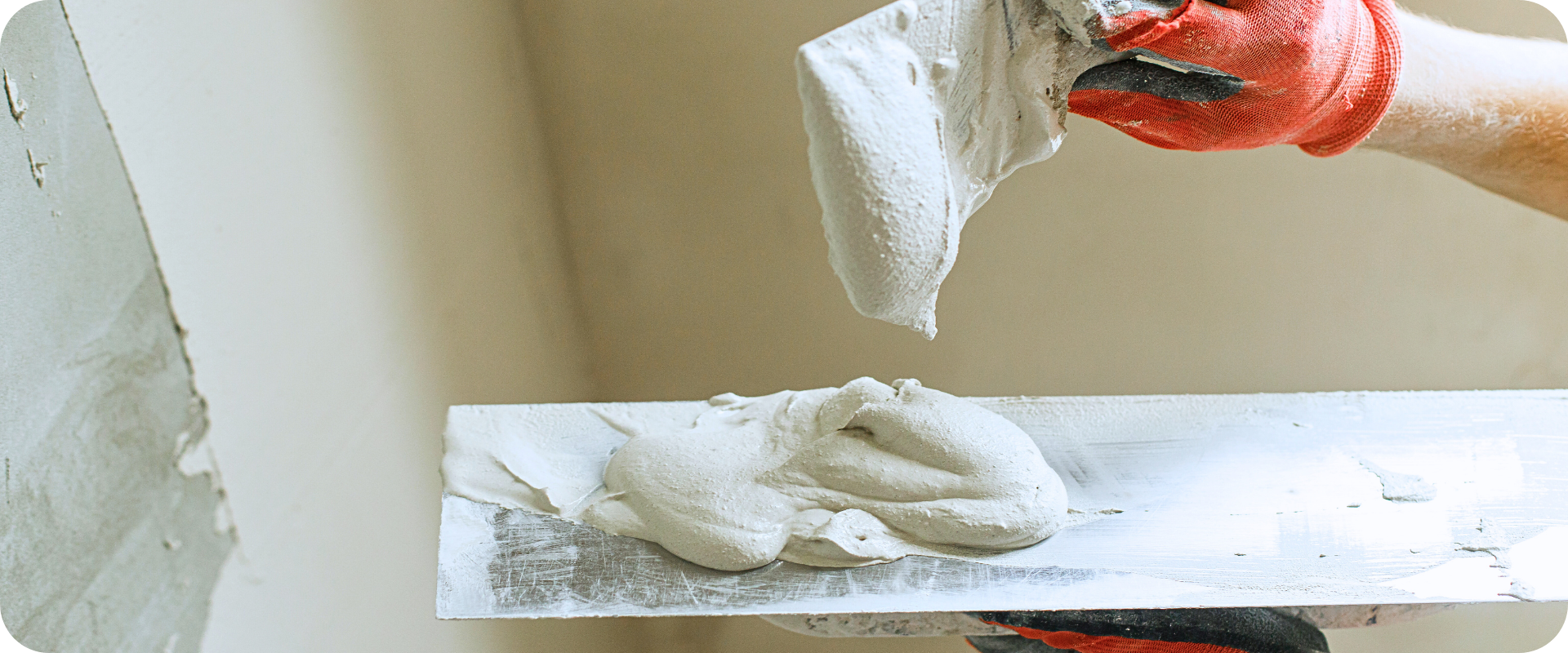
Types of Joint Compound
There are two main types, depending on how they dry:
• Ready-mix: Comes ready to apply, ideal for standard jobs. Easy to sand and commonly used indoors.
• Setting-type: Mixed on site and dries by chemical reaction. Sets in varying times (20, 45, or 90 minutes), ideal for humid climates or quick repairs.
The performance of Joint Compound is closely linked to the quality and proportion of the additives used : cellulose thickener for viscosity control, setting accelerator for faster drying, polycarboxylate to improve adhesion, biocide to prevent microorganisms, redispersible polymers to increase strength and flexibility, and pigments to ensure uniform and lasting coloration.
Main applications
Joint Compound has multiple applications within the drywall system and beyond:
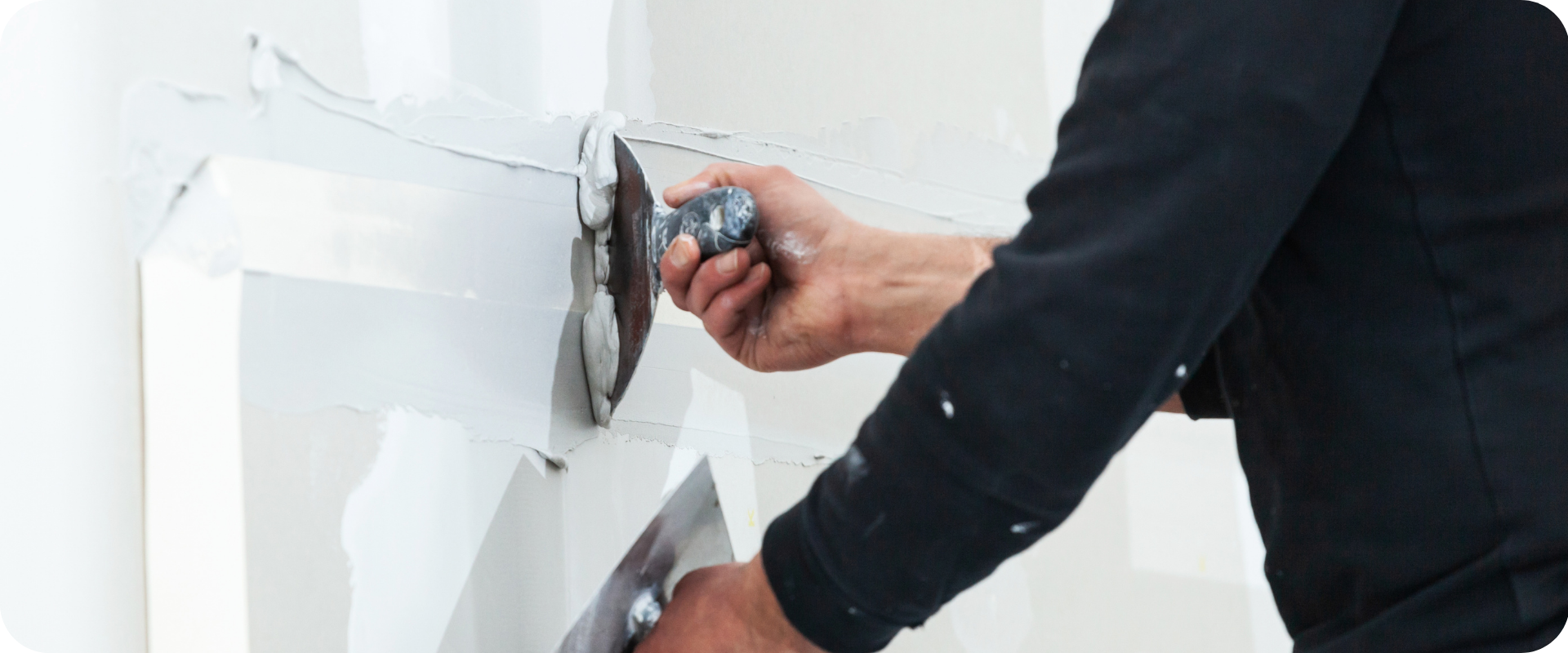
1. Treatment of joints between plasterboard panels, achieving flat, mark-free surfaces.
2. Filling of screws and nails, ensuring a uniform finish.
3. Repair of cracks and crevices in plaster or concrete walls.
4. Surface leveling prior to painting or wallpapering.
5. Creation of decorative textures in customized interiors.
What happens if you don't add additives to the formulation?
Although it may visually appear to be a simple mixture of plaster and water, joint compound is a product that relies on the engineering of its formula to meet construction requirements. Omitting functional additives can seriously compromise its technical performance, affecting not only the applicator's work, but also the quality and durability of the finish. Here we explain why additives are mandatory and not optional, and what the consequences are of not using them.
• Loss of water retention: Difficulty smoothing, uneven finish, and possible detachment of the joint tape.
• Poor workability: Slowerapplication , greater fatigue for the worker, and rougher surface.
• Cracks and fissures: Appearance of microcracks or cracks in the joints, reducing the useful life of the finish.
• Low adhesion: Detachment , bubbles, or the need to rework defective areas.
• Shrinkage: Visible sagging that requires reworking.
• Microbiological contamination: Greater effort when sanding, rough surface, and risk of damaging the panel.
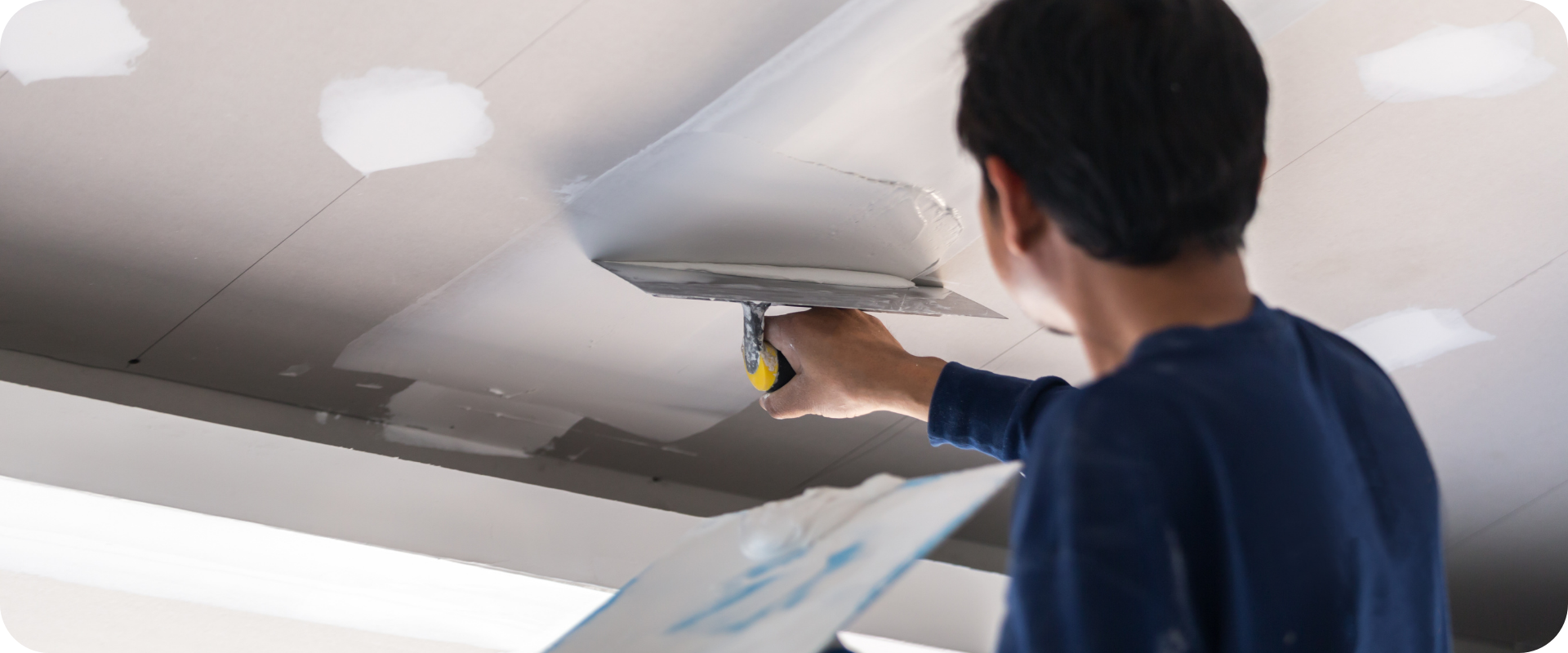
In the construction industry, where detail and time make all the difference, joint compound is more than just a filler: it is a technical solution that influences the final quality of each project. A good formulation, backed by reliable additives and adapted to local conditions, guarantees efficiency on site, end customer satisfaction, and a better reputation for the manufacturer.
Are you formulating or reformulating your line of joint fillers?
AtTreechem, we support you with additives that make a difference. Boost their performance, improve their adhesion, flexibility, and moisture resistance, preventing cracks and mold.
Learn the key factors behind high-quality stucco: substrate, rheology, adhesion, cracking, and technologies to optimize its application.
Learn the key formulation principles for developing grouts with superior performance, consistency, and durability for various construction applications.

The open time of ceramic adhesives refers to the period during which the material retains its ability to wet the substrate and develop effective adhesion.
.png)
Did you know that 65% of structural concrete deterioration is directly related to corrosion caused by moisture?

Celluloses are high molecular weight polysaccharides. They are transformed through chemical reactions into cellulose ethers, key additives used in multiple industries.
Polyamine compounds are key cationic organic coagulants in the treatment of industrial and municipal wastewater.
.png)